
The security personnel conducted a flag march on Thursday in Odisha's violence-hit Sambalpur city, where internet services were suspended and security tightened as the district administration geared up to organise a peaceful Hanuman Jayanti.
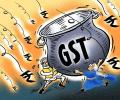
The GST collection in April touched the highest ever level of about Rs 1.68 lakh crore, up 20 per cent from the year-ago period, on improved compliance and recovery in business activity, the Finance Ministry said on Sunday. During the month, 1.06 crore GST returns from GSTR-3B were filed, of which 97 lakh pertained to March 2022. The gross GST revenue collected in April is Rs 1,67,540 crore, of which CGST is Rs 33,159 crore, SGST Rs 41,793 crore, IGST Rs 81,939 crore (including Rs 36,705 crore collected on import of goods) and cess Rs 10,649 crore (including Rs 857 crore collected on import of goods), the ministry said.

Investors' wealth jumped over Rs 59.75 lakh crore in the 2021-22 fiscal, helped by a largely buoyant trend in domestic stocks with benchmark index Sensex surging over 18 per cent during the period. Braving many headwinds in the latter part of the current fiscal, Sensex closed the 2021-22 financial year with a gain of 9,059.36 points or 18.29 per cent. Mirroring optimism in equities despite worries related to geopolitical tension, inflation concerns, FII selling, the market capitalisation of BSE-listed firms rallied by Rs 59,75,686.84 crore to Rs 2,64,06,501.38 crore in the entire 2021-22 fiscal.

The government's move to freely supply coronavirus vaccines to the states for universal inoculation and extend free rations to help the poor tide over the pandemic will only add an additional 40 bps of GDP to fiscal deficit, says a report, which also called for more transparent vaccine distribution plan for efficient vaccine allocation to the states.

Nikunj Saraf, Vice President Choice Wealth, answers your queries.

The primary market has seen hectic fundraising activity in April-November 2021, with 75 companies garnering Rs 89,066 crore through their IPOs, much higher than in any year in the last decade, Economic Survey showed on Monday. Moreover, a flurry of technology startups made their public debuts during the period. In comparison, 29 companies raised Rs 14,733 crore through initial public offerings (IPOs) during April-November 2020.

The IPO lane will continue to be busy in December as 10 companies have lined up initial share-sale plans worth more than Rs 10,000 crore, merchant banking sources said on Wednesday. Moreover, the initial public offerings of Star Health and Allied Insurance and Tega Industries are currently open for public subscription. This comes after 10 firms successfully concluded their initial public offerings (IPOs) in November. Among the companies that scheduled their IPOs in this month include RateGain Travel Technologies, travel and hospitality technology services provider, and Anand Rathi Wealth Ltd, part of Mumbai-based financial services group Anand Rathi.

Uttar Pradesh has the potential to attract investment of about Rs 72,000 crore (Rs 720 billion) by 2020 in the field of electronics system design and manufacturing.

Omkeshwar Singh, Head, Rank MF, a mutual fund investment platform, answers your queries.

The 30-share BSE benchmark tanked 535.57 points or 1.13 per cent to close at 46,874.36 on Thursday. It has now lost 2,917.76 points in five days.
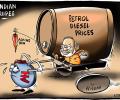
The Union government has collected Rs 94,181 crore through levy of excise duty on petrol and diesel in the first three months of the current fiscal on the back of a record tax on fuel that yielded 88 per cent higher revenue the previous financial year, the Lok Sabha was informed on Monday. Excise duty on petrol was hiked from Rs 19.98 per litre to Rs 32.9 last year to recoup gain arising from international oil prices plunging to multi-year low as pandemic gulped demand. The same on diesel was raised to Rs 31.8 from Rs 15.83 a litre, according to a written reply by Minister of State for Petroleum and Natural Gas Rameswar Teli in the Lok Sabha. This led to excise collections on petrol and diesel jumping to Rs 3.35 lakh crore in 2020-21 (April 2020 to March 2021), from Rs 1.78 lakh crore a year back, he said.

Nine of the top-10 most valued domestic companies together added a whopping Rs 2,22,591.01 crore in market valuation last week, with heavyweights RIL, TCS and HDFC twins gaining the most. During the last week, the BSE benchmark Sensex rallied 1,690.88 points or 3.21 per cent. The index reached its all-time high of 54,717.24 on August 5. Barring Bajaj Finance, rest nine companies -- Reliance Industries Ltd (RIL), Tata Consultancy Services (TCS), HDFC Bank, Infosys, Hindustan Unilever Ltd (HUL), ICICI Bank, HDFC, State Bank of India and Kotak Mahindra Bank -- logged gains.

On media reports quoting some Maharashtra government officials that vaccines in the state are "finished" and adversely impacting the vaccination drive, the ministry said a balance of 7,49,960 vaccine doses is still available with the state for administration to eligible population groups.
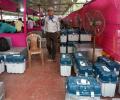
The poll-panel called these seizures by its various field and technical enforcement teams a "historic milestone" achieved "for the first time in any assembly electoral process", meaning during simultaneously-held assembly polls.

The market capitalisation of BSE-listed companies jumped to a record high of Rs 2,40,04,664.28 crore on Tuesday, driven by a rally in stocks that also saw the benchmark Sensex touching its lifetime peak of 53,887.98 points. Rallying for the second consecutive day on Tuesday, the 30-share BSE index closed at a fresh closing peak of 53,823.36 points, a jump of 872.73 points or 1.65 per cent. During the day, it zoomed 937.35 points to 53,887.98 points.

The Indian rupee is expected to trade between 80 and 84 against dollar in the first three months of 2023 with support from overseas inflows though worsening current account deficit (CAD) and reduced interest rate differential between the US and India pose challenges. According to a Business Standard Poll of 10 participants, most said the rupee could gain strength in January due to foreign inflows, and the Reserve Bank of India (RBI) is not expected to allow the currency to depreciate ahead of the Union Budget scheduled on February 1. The rupee depreciated 10.15 per cent in 2022, its worst performance since 2013 as the war in Europe and the interest rate increase by the US Federal Reserve prompted investors to flee emerging markets.
Initial share sales are set to dazzle the Dalal Street in 2022 too as companies are expected to garner up to Rs 1.5 lakh crore in the New Year, continuing with the bullish momentum after 2021 turned out to be the best IPO year in two decades for the Indian market. Excessive liquidity and increased retail investor participation ensured a persistent euphoria in the Initial Public Offer (IPO) space wherein companies mopped up more than Rs 1.2 lakh crore this year even as pandemic gloom shadowed the broader economy. In 2022, the higher amount of funds through the primary market will be largely driven by the mega IPO of state-owned Life Insurance Corp (LIC).

The market capitalisation of BSE-listed companies reached an all-time high of Rs 261.73 lakh crore on Thursday, helped by a massive rally in the equities where the benchmark Sensex zoomed 958 points to end at a fresh lifetime peak. The 30-share BSE benchmark jumped 958.03 points or 1.63 per cent to settle at its new closing peak of 59,885.36. During the day, it gained 1,029.92 points to touch an intra-day record high of 59,957.25.

Arvind Mills Ltd has posted a net profit of Rs 366.60 million for the quarter ended December 31, 2002 as compared to net loss of Rs 216.30 million in the quarter ended December 31, 2001.

The farmers' agitation against new agri laws will lead to economic loss of over Rs 70,000 crore in the December quarter owing to supply chain disruptions, particularly in Punjab, Haryana and border areas of Delhi, the PHD Chamber of Commerce and Industry said on Thursday. The chamber's president Sanjay Aggarwal said "the 36 days farm agitation so far will have more than Rs 70,000 crore economic loss in the Q3 FY 2020-21 due to...disruption in supply chains and day-to-day economic activities particularly in the progressive states of Punjab and Haryana and border areas of national capital Delhi."

The government on Monday projected a 16.67 per cent growth in gross tax revenue in the next fiscal beginning April 1, at over Rs 22.17 lakh crore. The revised estimates of gross tax revenue for the current fiscal has been pegged at Rs 19 lakh crore, lower than the Rs 24.23 lakh crore budgeted earlier. Economic Affairs secretary Tarun Bajaj said, "Our revenue figure is under-stated not overstated.
The mobile data revenue at Rs 2,324 cr registered a growth of 70 per cent
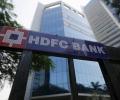
The country's largest private sector lender HDFC Bank on Saturday reported a 23 per cent jump in standalone net profit to Rs 10,055.20 crore for the March quarter, led by growth in loan demand across categories and lower provisioning as bad loans were trimmed. The bank's net profit during the corresponding period of the previous fiscal stood at Rs 8,186.51 crore. "After providing Rs 2,989.5 crore for taxation, the bank earned a net profit of Rs 10,055.20 crore, an increase of 22.8 per cent over the quarter ended March 31, 2021," HDFC Bank said in a regulatory filing.

Ahead of the start of the ninth season of the IPL, Rajneesh Gupta presents a detailed statistical analysis of the players involved.
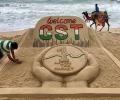
India's Goods and Services Tax (GST) collection surged to Rs 1.30 lakh crore in October, the second highest since its implementation in July 2017, indicating economic recovery from the COVID-19 pandemic and impact of festive demand, a finance ministry statement said on Monday. The highest GST collection of Rs 1.41 lakh crore was recorded in April 2021. This is the fourth time in a row when the GST collection was upwards of Rs 1 lakh crore. The collection from GST was Rs 1.17 lakh crore in September, 2021.

Bombay High Court-appointed arbitrator retired Justice CK Thakkar delivered the verdict on July 17 and told BCCI to pay Rs 4,800 crore as compensation by September 2020.

Rakesh Jhunjhunwala has picked up a 1.29 per cent stake in Tata Motors. The September quarter shareholding pattern disclosed by the automaker showed Jhunjhunwala holding 40 million shares.

Falling for the sixth straight session, the BSE Sensex plunged 1,114.82 points or 2.96 per cent to close at 36,553.60 on Thursday, tracking a heavy selloff in global markets. The market capitalisation of BSE-listed companies stood at Rs 1,48,76,217.22 crore, down by Rs 11,31,815.5 crore in six sessions. Since September 16, the 30-share BSE benchmark index has fallen by 2,749.25 points.

Privatisation-bound Bharat Petroleum Corporation Ltd (BPCL) on Monday said it will exit Numaligarh refinery in Assam by selling its entire stake to a consortium of Oil India Ltd and Engineers India Ltd for Rs 9,876 crore. The sale of Numaligarh Refinery Ltd clears the way for privatisation of India's second-largest fuel retailer. In keeping with the Assam Peace Accord, the government had decided to keep Numaligarh Refinery Ltd (NRL) in the public sector. As part of this, BPCL was to sell its entire 61.65 per cent stake to state-owned firms.

Nikunj Saraf, Vice President Choice Wealth, answers your queries.

The Sensex took just five trading sessions to surpass the 36,000-level milestone, from 35,000.

From the 30-share pack, 24 companies fell, with Yes Bank emerging as the top loser, dropping 8.36 per cent, followed by NTPC, M&M and Vedanta.

The amount of financial assistance to each state and Union Territories is based on their COVID-19 caseload.

From its all-time peak of 38,989.65 scaled on August 29 this year, the Sensex has fallen by 2,921.32 points, or 7.5 per cent, to 36,068.33.

In six trading sessions to Friday the market capitalisation of BSE-listed companies saw a massive decline of Rs 11,76,985.88 lakh crore. All Sensex components were trading in the red, led by losses in Tata Steel, Tech Mahindra, Infosys, Mahindra and Mahindra, Bajaj Finance, HCL Tech and Reliance Industries.
Six of the top-10 most valued domestic firms added Rs 91,629.38 crore cumulatively in market valuation last week, with ICICI Bank and Tata Consultancy Services clocking maximum gains. During the last week, which was holiday-truncated, the Sensex rallied 929.83 points or 2.10 per cent. The list of gainers had Reliance Industries Ltd (RIL), Tata Consultancy Services (TCS), Hindustan Unilever Ltd (HUL), Infosys, ICICI Bank and Bharti Airtel.

Bajaj Finance was the top loser, tumbling 4.68 per cent, followed by Tech Mahindra, IndusInd Bank, ICICI Bank, SBI, Reliance Industries, Bharti Airtel and HCL Tech. NSE Nifty crashed 290.70 points or 2.43 per cent to 11,680.35.

The government's subsidies on food, fertilisers, LPG and kerosene are pegged at Rs 5.96 lakh crore in the current fiscal, over 2.5-fold jump from the initial budget estimates as the Centre distributed additional foodgrains free of cost to help poor mitigate the impact of COVID-19 pandemic. In February 2020 Budget, presented in the pre-COVID scare, the government had estimated the subsidy bill at Rs 227,794 crore. However, all the budget estimates, have undergone major revisions as the country imposed strict lockdown to check the spread of COVID-19.

Omkeshwar Singh, Head, Rank MF, a mutual fund investment platform, answers your queries.

The housing finance major issued non-convertible debentures and warrants to raise another Rs 4,000.03 crore.
